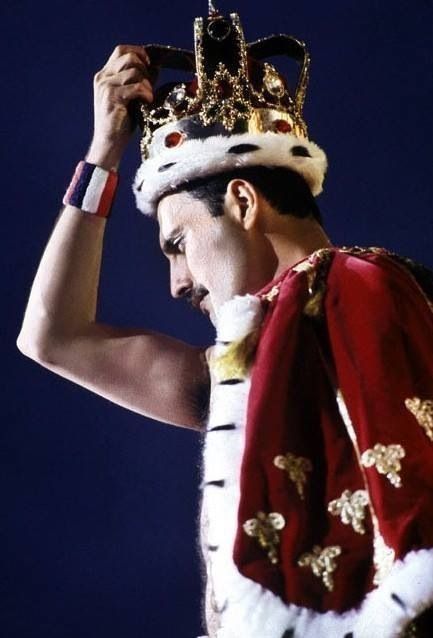
Freddie Mercury and Choosing Your Culture

Of all Third Culture Kids (TCKs), Freddie Mercury is certainly the most famous. Everything about the man screams Rock Star– his outrageous outfits, his incredible talent, and his well-documented sexual exploits. Everyone seems to focus on these parts of him, but there’s another thing not many people talk about- the fact that he choose his culture, and it wasn’t what he was born into.

“Freddie’s real name was Farrokh Bulsara. Whether it’s Persian or Indian or British — everyone’s going to claim him,” says actor Rami Malek, who played Mercury in a recent biopic.

Everyone might be claiming him, but who was the real Freddie Mercury?

First off, he and his family were Parsi (with roots in India), and were Zoroastrian by faith. He may not have practised the religion to the letter, but he did the important things: taking part in a Navjote ceremony at age 8 (a coming of age ritual similar to a bat mitzvah or confirmation) and insisting his funeral be in-keeping with Parsi tradition for his family.

He was born in the English protectorate of Zanzibar. Many have no idea he was not born ‘Freddie Mercury’- instead, his birth name was Farrokh Bulsara. He didn’t speak with an English accent until he was much older, because he wasn’t raised in England for the majority of his young life. If you listen closely in some interviews, the Indian part of his accent slips through; otherwise, you’d have no idea.

He went to St. Peter’s Church of England School, a prestigious English-style boarding school in Panchgani, India, just outside of Bombay. It was here where he gained the nickname, ‘Freddie’. The boy who went there was skinny, buck-toothed, and quiet; the exact opposite of the stage personality he would invent later. Classmates like Ajay Goyal had made no connection between Freddie and Farrokh until much later: ‘I’d heard of Freddie Mercury, of course, but I never made the connection with Farrokh. I only discovered it was him from our school alumni page a few years ago.’

Farrokh left St Peter’s shortly after discovering his passion for music (a passion that apparently caused his other grades to take a nosedive). He opted instead to finish the last two years of his schooling at the Roman Catholic St. Joseph’s Convent School back in Zanzibar, only to move again when his family fled revolution and persecution in 1964, moving to England when he was seventeen. Like most TCKs, Farrokh didn’t want to leave India or Zanzibar. He felt at home there, the culture was one he’d grown up with- the streets of London must have been a far cry from home when he first arrived. But, like many of us, he wasn’t going to stay down forever. There were opportunities in London, and Farrokh grabbed them with both hands.

He recieved a diploma in Art and Graphic Design from Isleworth College and Ealing Art College in England, sold second-hand clothes at the Kensington Market (where he actually met David Bowie) and held a job at Heathrow Airport. However, he never forgot the passion he picked up in boarding school in India: Music. The first songs he learned to play were Indian songs. In an interview with The Telegraph, Mercury’s mom said that “Freddie was a (Parsi) and he was proud of that.”

He went to lengths to hide his ethnicity, according to band member Roger Taylor, because ‘he felt people wouldn’t equate being Indian with rock and roll.’ Contemporary musicians and academics are inclined to agree with him.

Leo Kalyan, a queer British Pakistani-Indian singer-songwriter, says Mercury’s South Asian heritage is still not fully understood today: “because South Asians are still deliberately ignored within the Western music industry… (Freddie) didn’t talk about going to school in India or his love for Lata Mangeshkar (A Bollywood singer whom he adored). That wasn’t part of his narrative.”

However, it is a disservice to TCKs and Freddie himself to say he only became ‘Freddie Mercury’ to whitewash his identity. TCKs commonly adapt to the culture we’re in not only because there’s no choice, but because we’re strong enough to remember who we are inside and bring that to the culture we adopt. There is always a conscious choice when we become who we are- whether that’s assimilating, keeping to our home culture, or (more often) choosing what we take from each.

The ‘Mercury’ in his name apparently came from his music itself- fitting, considering how deeply ingrained it was to his personality. The final verse of the song ‘My Fairy King’ goes:

Someone, someone has drained the colour from my wings
Broken my fairy circle ring
And shamed the king in all his pride
Changed the winds and wronged the tides
Mother Mercury Mercury
Look what they’ve done to me
I cannot run, I cannot hide

“He said, ‘I am going to become Mercury, as the mother in this song is my mother,’” Guitarist Brain May said, “And we were like, ‘Are you mad?’”

Maybe. But maybe this was also part of Freddie’s process: carving a place in culture for himself. British culture wasn’t exactly a safe haven for queer people of colour (especially not after Enoch Powell’s infamous ‘Rivers of Blood’ speech)… but his own fairly conservative upbringing in various Christian schools and Zoroastrian faith condemned queerness- a core part of his identity. Perhaps, for Freddie, distancing himself from the non-Western part of him was synonymous with distancing himself from the hurt and shame associated with his sexuality.

May once stated, “I think changing his name was part of him assuming this different skin… I think it helped him to be this person that he wanted to be. The Bulsara person was still there, but for the public he was going to be this different character, this god.”

Freddie even included hints of his non-English heritage in his music: songs like Bohemian Rhapsody contain blink-and-you’ll-miss-it references, words like ‘Bismillah’ (Arabic, meaning ‘In the Name of God’). His family are quick to remind us how his non-Western identity influenced him: “I think what his Zoroastrian faith gave him,” his sister Kashmira Cooke explained in 2014, “was to work hard, to persevere, and to follow your dreams.”

However, like most TCKs, Mercury also didn’t fully identify with what he was born into. Drummer Roger Taylor once said, “Freddie talked to me about being Parsi-Indian and about his family. But it was all very private stuff. The Parsi culture was very different, and he felt that he wasn’t part of that culture. His mother was always wonderful to him, but he knew there was an immense gap in lifestyles.”

“Freddie was always into Western music but I think when you grow up in an Indian household that stuff sort of seeps deep into you,” said musician Pheroze Karai, “It’s blatant in songs like ‘Mustapha.’ Even when he’s just riffing live there was a combination of things where it could almost be a ghazal.”

There’s an infinite number of Freddie Mercury’s, and it all depends on who you speak to, what culture they’re from, etc.

In the Rami Malek movie, you get the idea that becoming British was a no-brainer for Freddie, that his family wouldn’t accept him the way they accepted Farrokh. In-film, his father snaps, ‘now the family name’s not good enough for you?’

But perhaps this is looking at things the wrong way. There wasn’t anything wrong with Farrokh Bulsara, apart from that wasn’t who Freddie was. Like many of us TCKs, Freddie hopped continents as a kid and took little things from each culture, but every piece went towards the same person: Freddie goddamn Mercury. And there’s nothing wrong with that. If you say, ‘but he should have acted more Indian’ or ‘he was British, that’s the end of it’, you aren’t understanding the TCK experience, or even the immigrant experience.

“It’s interesting to see how much people still think he was a white British dude… Freddie Mercury is someone who transcended being just desi to more on kind of this world stage.” – Nadia Akbar, author of Goodbye Freddie Mercury

Today, we think of Freddie as a British National Treasure. He had the accent, dressed as our royalty, and constantly included our flag in his performances. At the same time as he exemplified Britishness, he was himself: a queer, South-Asian, Zoroastrian TCK who centred his life around music, resulting in iconic songs such as Bohemian Rhapsody, and the best-selling album in UK chart history: Queen’s Greatest Hits.

Maybe we should celebrate more of his whole cultural identity, rather than trying to claim him for one culture or another.


 

Parenting a Third Culture Kid

Being a boat kid, an army brat, or a multiple-times-an-immigrant kid isn’t without benefits: ‘Third Culture Kids’ (TCKs) are more adaptable, more open-minded, and better cross-cultural communicators than our single-cultured counterparts.

Yet, travelling a lot between cultures we have no ‘birthright’ to participate in isn’t without challenges either. Often the people we need help from most- our parents- are woefully unaware of how hard it can be to be a TCK.

Don’t get me wrong, we have great perks to counter the hardships: we have international networks of friends, we can speak multiple languages, and we get to travel the world, for pete’s sake! But on the other side, we grow up without a single culture to identify with, a single friend group who totally understands the nuances of our individual experiences, etc. Even answering a simple getting-to-know-you-question like, ‘where are you from?’ is a headache that TCKs don’t know how to answer. Whenever I’m asked, it feels more like a punch to the gut than a question.

Not to mention, TCKs are more likely to get depressed or anxious when we return to our birth countries than when we’re ‘abroad’. For us, being foreign is home.

So, what can parents do to help us through life?

Realise it’s harder for us than it is for you. When you’re a kid, you don’t get a choice in whether or not you’re moving. Every time you move, you loose friends, you have to set up shop in another place, and then leave again. Sure, parents go through this too, but parents have the choice to say No, I don’t want to leave this country. Kids don’t. And that sucks for us, especially when we aren’t old enough to understand why we have to move and loose all our friends, culture, and everyday experiences.

Give us time, not money. Kids need love and affection to grow, and it’s no different with TCKs. Family is the one constant for most of us, so take the time to build love and affection. Many parents of TCKs have busy jobs, well-paying jobs, etc, that mean they can’t spend a lot of time at home. That’s fine; that’s the reality for a lot of people. But when you’re home, make sure you’re making memories, not frozen dinners and reruns of the same show every night.

Kids need belonging, recognition, and connection. Adults often think ‘Oh, kids adapt fast. They’ll get over it’. But I’ll say it again, in bold: kids need belonging, recognition, and connection, and with each move, these things are torn from our lives. We’re forced to try to find them in a new place, new culture, new language we might not even speak. We tend to put too much emphasis on this rebuilding, and not enough on what we’ve lost.

And yes, leaving a place, you are loosing what you had there- even if it is to gain something elsewhere. This means you need to help your kids mourn what they had there: the good, the bad, and the ugly. Otherwise they’re going to repress that loss until it becomes depression in later life, which will be a far bigger problem.

Often, when we first move, we aren’t going to follow your advice. ‘Why don’t you make some friends at your new school?’ Well, you’re probably going to find us on Skype at 2AM with our friends three timezones away. This is fine. This is normal. We need to have a steady group of friends, otherwise we feel so alone it’s impossible to exist. Most TCKs eventually grow out of this phase- some of my friends did it in weeks, I did it in six long years of adjustment and settling for single-cultured friends who had no interest in anything other than the most recent episode of Britain’s Got Talent… everyone develops at their own pace.

Ask about our experiences. Where we’ve lived, what we’ve identified with, what’s been fun, what worries us, etc… These kinds of questions allow us to remember old places fondly and express our lives in a healthy way, rather than repressing them as something people don’t want to hear about.

Remember home for you isn’t home for us. When I finally figured out I was a TCK (I’d known something was abnormal about me for some time, I never knew there was a name for it until the ripe old age of twenty), I talked to my mother about it.

‘Oh,’ She said. ‘I always assumed you identified as British.’

It took really thinking about it, reading a few articles, watching a few TED Talks, for us all to concede how strange this really is, when you think about it. I’d been born in Britain, but left when I was mere weeks old, and only came back fourteen years later. What did I know about being British? I’d never even met most of my family members, and when I did they weren’t anything like me. And what did I know about Britain? Tea and Crumpets. Did I know what a crumpet was? Absolutely not.

Would my transition back to the UK have been smoother if I hadn’t been led to think of it as ‘home’? Home is a concept which insinuates instant community and belonging… it has nothing to do with my or my parents passports. Parents of TCKs would do well to remember this.

Don’t be hurt if we aren’t as patriotic as you– really, it’s only natural we question more of our passport countries than you do, because we simultaneously have an outsider’s perspective and an insider’s passion for national affairs.

Teach us about where we come from. TCKs don’t get to be raised with our single culture or single heritage, so we have to make do with what we have. We have parents who probably were raised in our birth country, and who know enough to pass down to us. Part of feeling a sense of belonging is having a background, and without knowing at least a little of your DNA’s heritage, it’s twice as hard to build yourself up with a steady sense of identity.

Be prepared for us to reject parts of your culture. Part of the fabric of what it is to be TCK is not fitting neatly into any one cultural box. You can’t Marie-Kondo us away, and you shouldn’t try to! Just trust that we’ll accept the parts of our shared culture that make sense to us, and we’ll try to respect the rest. But first teach us where we come from. Then we’ll talk.

Don’t you dare try to fix us. TCKs are NOT broken. We’re just different- and if you don’t think that’s a bonus, go read the introduction of this article again.

Arm yourself with information. There are some great books on TCKs, some excellent articles (though this one is the best, objectively speaking), and frankly unmissable TED Talks.

Don’t feel bad about raising us on-the-go. Is life for a TCK more challenging than it is for most kids? Absolutely. Would we have it any other way? Absolutely not. Because of the way I was raised, I’ve struggled to fit in. I’ve struggled to learn new languages. I’ve been through anxiety and depression, and I’ve come out the other end not only walking but sprinting. Your kids will do the same thing. I know very few TCKs who aren’t grateful at all for the colourful, messy, organised chaos that is their backstory.


I Grew up on a Boat, Now I’m Thriving in Quarantine

Weird flex, I know. But it makes sense.

On the boat, there were no other people. I couldn’t just go for a walk to the shops, or meet my friends at a cafe. I didn’t even have friends, because there are a pitiful amount of children on boats. When you do meet other boat kids, it’s tinged with impermanence- you’ll sail away in one direction, they’ll go another.

Wherever you travel, there’s no guarantee you’ll have the internet at home. And even if you do, boats are self-sustaining, making their own electricity to run the bare essentials, so there’s no guarantee you’ll have the electricity to power a laptop or TV.

So, you’re left to your own devices, with 0 social contact aside from your parents.

Now, as I’m locked in a house with my parents for the next 12 weeks, I can’t help but see the parallels. We can’t just go to the shops. We only have each other right now, in the physical sense. Going out for food is too big a risk right now, so we’re making do with our extensive supply of tins, pasta, and rice (some of which we actually had on the boat with us- maximum nostalgia factor, right?).

In fact, the circumstances right now are better than they were on the boat- I have Skype for my boyfriend (oh my god, I have a boyfriend!). I can instantly message all my friends (I know, I have friends!). I even have the entire internet at my disposal to learn new skills, procrastinate (what a blessing) and just generally wait out the apocalypse.

It’s strange to say my life has actually improved in a lot of ways since the quarantine began… Before, I had 0 motivation to do anything. I was always walking somewhere- to university, to a cafe, to buy junk food. I had an exercise bike in my room I’d paid good money for and hadn’t touched in months. Getting up was a laborious task, because it meant everything was just starting over again, and I was out of control of it.

Now, I’m my own boss. I can go online whenever’s convenient to look at my university lectures, I can wake up when I like, not when I need to (I can’t remember the last time that happened), and I’m on my bike every morning, practising Spanish on my phone while I do it.

For the first time since the boat, I have time to pause and think about what I really want from the future, from life. I have time to work on everything that took a back seat to university and socialising- my book, my blogs (hello there), and my mental/physical health.

I’m even practising make-up every day- before quarantine, this was almost a chore, a way of looking good for other people. Now, who am I looking good for? Me. I drew pink cherry blossoms on my cheeks the other day. Take that, society.

I feel a pressure to eat all the fresh food in the house before it goes off, and I’m breaking out a lot of the old boat recipes to do it- lentils, potatoes, and rice dishes are in full flow right now. Before the quarantine, my diet was packets of crisps and instant noodles because I was working so much I didn’t have time to cook properly.

My god, I even have a skin routine now. I haven’t had time for that crap since I was fifteen.

Being stuck in my room all day with an open window for company is giving me a lot of nostalgia for how I used to be. It isn’t the painful twinge of nostalgia I usually get when thinking about the boat and the old life; it’s more of a Hello, old friend.

Now, am I happy we’re in a pandemic? Hell no. I’d be on a plane to Malta right now to check out my future home and place of employment, if it wasn’t for this virus. I’d be moving out and starting my new life as a bona-fide adult. Instead, I’m drawing cherry blossoms on my cheeks and talking to the cat about the day- not exactly what I had in mind.

But there are good parts to being locked in a room with myself and my family, too. It’s an extreme change of lifestyle, but I find myself fitting into it like an old jacket I’d almost entirely forgotten about.


How are you adjusting to the quarantine? Let me know in the comments below.

Quarantine Cooking: Potato Pancakes

Okay, hear me out. They don’t taste that potatoey. And they’ll save you flour! This recipe is originally Korean, and was already delicious before it became vital to conserve flour.


You will need:

1 large potato OR 2 medium potatoes

1 onion

1/2 to 1 cup of flour

Salt and Pepper to taste

Any other things you might like in a pancake (sugar, spices, garlic, etc)

Oil (for frying)

Sauces of your choice (see a list of possibilities at the end)


Method:

Step 1: Chop up the potatoes and put them into a food processor. Process until they’re pretty much soup. (If you don’t have a food processor or blender, finely grate the potatoes and onion together into a big bowl). The closer to potatoey soup it looks, the better. Add salt and pepper to season, keeping in mind this is a traditionally savoury dish.

Step 2: Mix.

Step 3: Add 1/2 cup of flour, and if the mixture is still too thin to be comparable to normal pancake batter, add another half a cup.

Step 4: Mix. Now is also the time to add in anything you might want to flavour your pancake with, such as cumin, paprika, turmeric, or any seeds for extra crunch. If you’re going for a sweeter flavour of pancake you could also add sugar, berries, or something like that… though how these play off against the onion is not for everyone.

Step 5: In a pan, heat up your oil over a medium-high heat. Add your mix and fry as if it’s a normal pancake, turning after 3-5 minutes or when brown and crispy on the pan side.

Step 6: Repeat until you have no more batter.

Step 7: Wash your mixing equipment! This stuff sets like CEMENT.

Step 8: Enjoy your pancakes!

These are savoury, as I said before, though some people do enjoy them with sugar and lemon or syrup regardless. If you’re going to go the sweet route I’d recommend loosing the onion component of this recipe and substituting with a little more flour.

However, these are essentially big hash-browns in pancake format and go excellent with other sauces, such as:

  • Soy sauce
  • Ketchup
  • Mayo (or garlic mayo especially)
  • My personal favourite, sweet chilli sauce.


If you’re curious about the origin and history of this dish, you can look it up as ‘Gamjajeon’, which is it’s real name in Korean.


Hope this helps you out in these hard times. Comment if you try the recipe below!


Dating for a Third Culture Kid

Being a Third Culture Kid (TCK), your whole worldview is different. You see everything through multiple cultural fields, sometimes not even realising that’s what you’re doing. You’d think this makes communication easier- and it does!- but it makes relationships a whole lot harder.

Typically, we fall into two camps:

  1. We grab the first person we can stick to and don’t let go, so they can never leave us.
  2. We purposefully keep relationships shallow, so when the person leaves we can’t get hurt.

These patterns repeat themselves in pretty much all the TCK relationships I’ve seen or even been in myself. When it comes to breaking emotional barriers put up in childhood, we can be just as emotionally repressed as anyone else. I often brag I could go anywhere in the world and have a friend with open arms and a couch to sleep on. That’s a plus, but there’s a darker side to this coin we all try to ignore.

Growing up, TCKs moved around so often that there wasn’t a chance of any lasting relationship forming, so the mere idea of such a thing becomes a premium that makes life worth living.

Alternatively, you formed so many relationships you thought were meaningful, and had to leave them all at some point or another, so now as an adult you think What’s the point? These things never end well.

A loophole to these horrors is when TCKs date TCKs- which is about as rare and beautiful as seeing a shooting star do a loop-the-loop. When it works, it’s legendary. For the rest of us, we have to learn to empathise with our mono-cultured significant others, and they with us. Easier said than done.

Debate is hot about whether or not TCKs should stick to just dating TCKs, but really it comes down to this: does your partner understand you?

If your partner never wants to travel, or has never travelled, it can seem inconceivable to you that they’d want to stay so stagnant. To them, you probably seem like a free spirit at first, then as they get to know you they start to see your travelling as unrealistic or impractical, which, coming from someone you love, can hurt most of all.

Media shows relationships as being less stressful, because you can rely on someone else. For a TCK? That lack of independence makes life way MORE stressful. You want to live your own life, go where the wind takes you, settle where you feel right settling in the moment- but with a partner? That’s pretty much unthinkable, unless you have crazy high levels of compatibility.

High levels of mobility when you’re growing up changes the wiring in your brain- that’s pretty much a-given. When your life bans you from making long-term relationships, the inter-dependence that comes from finally having one as an adult really messes with that wiring. Independence, for a TCK, is safety- nobody’s going to leave if there’s no-one to leave. Not having that independence leaves you feeling naked on a thickly intimate stage.

But okay, let’s say you manage to get into a serious relationship. Congratulations, you’re a wizard… but you’re not out of the war zone just yet. Since we value independence so much, we tend to assume other people are the same.

What do you mean, you feel shitty when I don’t talk to you for a couple days?

I only booked that holiday for two weeks, why are you upset?

We probably seem slow on the uptake to our friends and lovers. Certainly, when your friends give up on you for being ‘distant’ and you don’t understand why, it’s a lonely feeling. It takes a while to realise that face-to-face interactions are imperative to non-TCKs, and without them they tend not to feel a connection.

When I was twelve, I added all my friends to a group chat on Facebook. This became my primary way of communicating until I was seventeen- when my classmates were out at parties, I was home on Skype getting drunk with my TCK friends, and that was fine. If I wanted time away, I could just log off and not need anybody’s permission. Fast forward to my first boyfriend, and the barrage of concerned messages I got when I didn’t talk to him for a whole day because I wanted some alone time, and you can see a pattern starting to form.

The key to developing yourself beyond someone others see as an inconsiderate idiot is in consideration.

How will my girlfriend feel if I spend the weekend alone so I can have some me-time?

How will my boyfriend feel if I book a holiday abroad for just myself and don’t tell him?

For most people these questions are easily answered, but TCKs aren’t most people. We’re people who have to try pretty damn hard to assimilate amongst most people; And even then, we’re still going to fail if the people we love aren’t patient as heck.

Depression in Third Culture Kids

Born into one culture, brought onto a boat at a young age, raised on-the-go… it can feel like your brain is a blender. Taking in all this information, culture, and experience at once, mixing it together, forming a ‘you’ that nobody else really gets.

Even when you return to the country where you were born, you might look like everyone else, but something’s different. You don’t relate to these people, you don’t sound like them or act like them. You’re expected to, for sure; but you don’t. Feeling out of place is only the beginning, because soon it dawns on you that your ‘home’- a place where you’re conceptually meant to feel most accepted- is just another case of culture shock. Another place to struggle your way into a community that never really fits.

When you say a Third Culture Kid (TCK) is depressed, be careful about it. Odds are, we’re not- not in the clinical sense, anyway. A TCK is a kid who’s grown up travelling- this means you’re constantly between countries, between cultures, and between friendships. Does this make us privileged? Absolutely. The background photo of this blog is me in Machu Picchu, one of the seven wonders of the world. TCKs live amazing lives, but that doesn’t mean everything is easy for us. Often, the hardest thing a TCK can do is ‘come home’.

When you’re travelling, you’re constantly starting over; learning the social customs of your new area. When other kids are learning how to relate to their peers, you’re having to learn the basics- what hand gestures can I make in this country? What phrases should I learn to have a conversation in this new place? I once had a friendship with a French girl named Sam. I know her name was Sam because she pointed at herself and said, ‘Sam’. I didn’t speak any French, so we just got along with a made-up series of grunts and hand gestures. After a month or so she sailed away, and I was left knowing I could have a friendship without actually verbally communicating. When I ask my non-TCK friends what social skills they learned when they were eight, they say ‘texting with emojis’ or ‘how to use my phone’.

Later, I became friends with three Spanish kids. I knew enough Spanish to introduce myself, but again, ‘normal’ communication was in short supply. And they left soon enough, too. It was a pattern that repeated itself throughout my time living on the boat, and continues to repeat itself for other TCKs. When you find people your age you get along with, either they don’t stick around or you don’t stick around. By the age of thirteen my reaction to making new friends wasn’t ‘I can’t wait to hang out’, it was ‘I wonder who’ll leave first’.

Do we get sad about this stuff? Absolutely. Does the tenth time sting as much as the first? Definitely. But does that make us depressed?

Not quite, technically speaking. We’re just in mourning, constantly. Sure, nobody’s died (most of the time), but we’ve moved on. Our friends have moved on. And whenever there’s movement, there’s loss that we have to figure out how to deal with at a very young age, before we can properly analyse the situation.

Therapists don’t often understand for two big reasons:

1. The term ‘third culture kid’ isn’t particularly well-known yet (I only found out a month or so ago, and I’ve been one all my life!).

2. They haven’t lived through the same experiences!

Children need to feel belonging, recognition, and connection in order to develop a ‘normal identity’. For TCKs, we often aren’t consulted in the decision to move. If we’re lucky, we might get a heads-up of when/where we’re going. Our parents, who most often aren’t third-culture, don’t understand the problem. Losses for the children are seen as gains by the parents; they watch their children move from place to place without truly recognising there’s a piece of childhood left behind everywhere we live as children.

Without even realising it, TCKs blame ourselves for losing friends. We don’t get the chance to mourn the countries we leave, because we aren’t ‘from’ there. As if the words on our passport are the only things allowed to effect our upbringing. All of this can cause a build-up of grief for a lot of TCKs.

A commonly-noted upside of travelling as a kid is the ability to easily adapt. But, when you aren’t given an outlet for the negative emotions that come with the constant changes, this ability turns on you. You become a performer, watching the people around you, mimicking their words and actions so you’ll be accepted. It’s a pack animal’s survival instinct, but it’s what you know. As a result, you lose your identity.

In high school, I wrote a ton of stories about aliens. Not War of the Worlds-type stuff, but from the perspective of aliens who’d been placed in high school to observe and learn about humans. Like me, aliens wouldn’t know Northern English Slang (‘what’s a bap? what’s a butty? On Mars we eat space eels!’). At the time, I thought I was just a weird kid. But now I’ve realised I’m a TCK, it’s starting to make a lot of sense.

The Good News:

Luckily, travel gives you a greater perspective of the world. By fourteen, I knew I’d lived enough for ten lifetimes- so it stood to reason that the hard times in high school would pass, and make me a stronger person for it.

It takes time, but eventually you figure out loss only occurs when you’ve loved something enough to be bothered by its passing. It’s good to love things that much, as long as you learn to mourn them properly and allow them to pass on, otherwise you find yourself reliving all these memories over and over. Living in the past doesn’t do anyone any good.

I didn’t even realise there was a problem until long after I’d graduated high school and been living in my passport-country for years. It happened when I was listening to the popular Tejano artist Selena Quintanilla, who sings in Spanish. I knew the words she was singing, knew I’d known them once, but couldn’t put a meaning to them.

It sounds like a small thing, but it was a massive blow. After living in South and Central America for the better part of a decade, I’d assumed the language, at least, would be part of my DNA until my dying day.

As an adult, I didn’t even know what the problem was. This is common; when losses aren’t resolved during childhood, you forget they ever happened. Then begin to ask yourself the supposedly easy (but important) questions in adulthood. Who am I? Where am I from? What can I trust, if everything around me is going to change all the time? Everyone leaves eventually, so who can I trust?

Of course, the seeds of these problems were planted long ago, in-between borders. They’ve taken root in the subconscious, and how could you possibly get a weed-killer in that?

It all starts with conversation. What do we do to mourn? Hold a funeral. What is a funeral, if not a celebration of the past? Talk to people about your travels, people you met, cultural things you’ve adopted. Hang up photos and let yourself remember the past as a part of you that’s over now, that you’ll always be grateful for. Don’t erase the loss you went through, because that pain is there for a reason.

When I lived on the boat, it felt like losing a whole world every few months, or even weeks. The pain tripled when my family returned to the UK and moved into a house. But the boat-years were also some of the happiest I’ve ever been through! Now that I’ve held a little funeral for those times, I can allow myself to fully appreciate the life I’ve been gifted with on land.


What about you? Can you relate to feeling depressed over past experiences that you can’t quite name? Let me know in the comments- I’d love to talk.


Being Third Culture- What Are You?

Hi. I’m Sarah, and I’m a Third-Culture Kid. And it feels weird to say that, because I’m not used to being able to call myself anything. Usually I find a box I can almost fit into, but nothing has ever been a perfect fit… until the other day, when I was having coffee with a friend.

‘You’re so lucky to be a TCK.’ She laughed, and my ears swivelled around without my permission.

‘A what?’

‘A third culture kid. You know, someone who grew up with more than one culture? I saw a post about it on Instagram.’

‘Oh. Sounds like me, then.’ I laughed, and conversation went on, but I wrote it on my hand when she went to the bathroom: GOOGLE: THIRD CULTURE KID.

So, What is a Third Culture Kid?

TCKs (what a cute nickname, right?) are people who grew up in cultures different to those of their parents. Think being born in America, then your dad gets a job in Argentina, and then five years later a better job in Latvia, and then three years later a different job in India. Think about moving around a lot as a kid, and what would do to a person- that’s what happened to TCKs.

How come I’m a TCK?

I was born in England, but only hung around here for a few weeks before I was taken to Florida by my loving parents, who I’m sure had no idea what they were doing (what parents do?). I attended a normal school, the only British kid surrounded by borderline Bible-Belt Americans, until I was seven years old. I was used to being an immigrant- that life felt normal to me- but I had no idea what was next.

It’s not every day your parents buy a boat behind your back, but there I was, stood at the bottom of a long ladder, while my parents talked through the finer details with ‘her’ current owners. The boat was suspended on metal poles, and the paint was chipping to hell. Inside, all the walls had been painted white, but were now faded yellow. It smelled like a decrepit hospital, too. Inside the cabins, the walls were made of puke-green carpet that, when you pulled it back, it turned out had once been navy blue.

Home sweet home, right?

My dad (a lifelong sailor) was in love, so it really was home sweet home. Not that anyone ever told me that, of course. I just woke up one morning and we were leaving our lovely hotel in Curacao (where we bought the boat) and moving onto my dad’s latest labour of love, which would smell of fresh paint, varnish, and anti-fouling (that’s barnacle poison to land-lubbers) for the next year.

Eventually, we set off. I was homeschooled by my mother, and my only playmates became my dolls and eventually a cat we rescued in Panama.

For the next seven years, we never stayed in one place for longer than six months. Life was a series of pit-stops; full of excitement, rainforests, late nights, fear of pirates off the coast of Columbia, learning about local culture, and so much more. At the age I was, your brain is like a sponge; what scientists call neuroplasticity? When you’re still developing you have neuroplasticity through the roof. So, as we travelled through Central and South America, how could some part of me not become mixed with Latin Culture? How could I be truly British, when I’d never lived there, and only visited a handful of times? Yet everyone told me I was British, and I hadn’t met enough British people to have any contrary evidence, so I felt British, without ever having heard of fish-and-chips or drunk a cup of tea.

Coming back to the UK was a bit of a culture-shock, to say the least. I’ll be covering that in a later post.

I don’t want to make it sound like it isn’t a privilege to be a TCK. It is. I’ve seen things most British people never get to see. I’ve also seen tragedies and poverty beyond what most British people can imagine. There are two sides to every story, and that’s what this blog is going to be about. (That, and some awesome recipes that’ve absorbed into my DNA from my travels… YUM!)

Thanks for reading. If you’re a TCK or not, I’d love to hear about it in the comments!


Design a site like this with WordPress.com
Get started